
Who Removes the Old Worktop, and What the Quote Should Say
Removing an old worktop involves disconnecting the sink and hob, lifting the old surface and disposing of it, so confirm who does each step and whether it is on the quote.
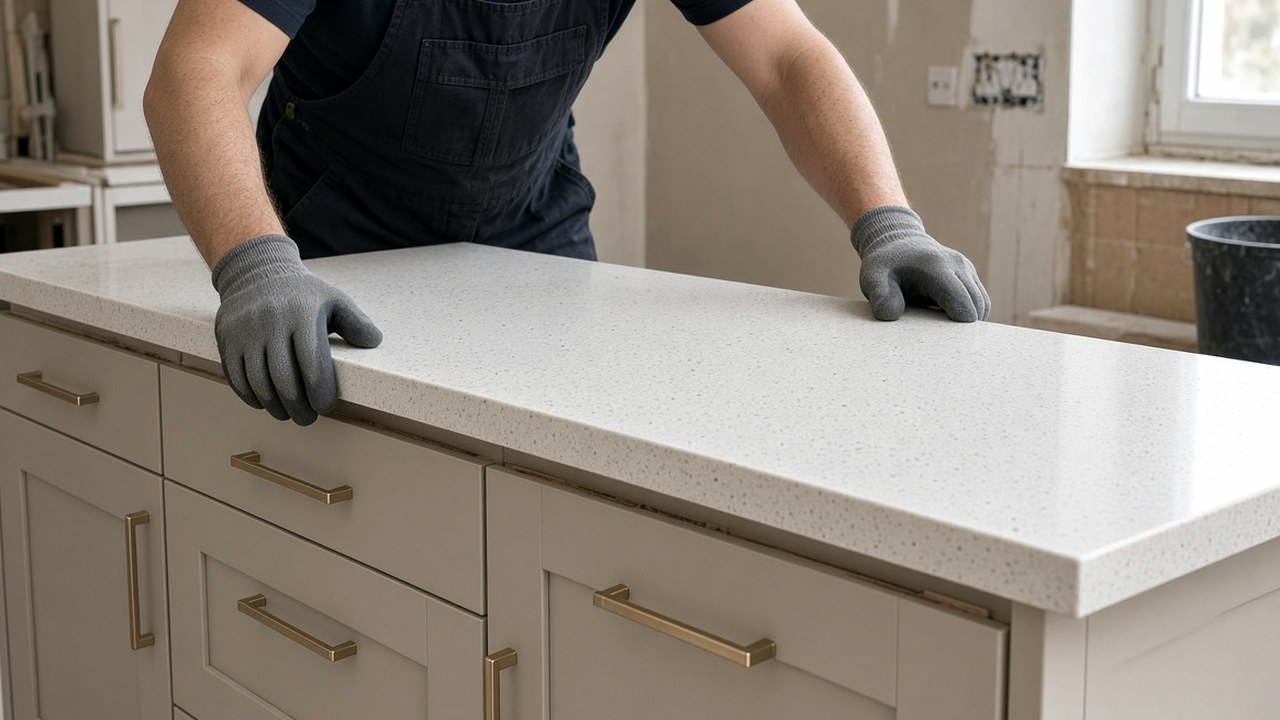
A new worktop cannot go on until the old one comes off. That sounds obvious, but removal is one of the most common gaps in a worktop quote. Someone needs to disconnect the sink and hob, lift the old surface, deal with the mess and take it away. Kitchen Worktops Store asks clients to confirm who does each step and to see it written on the quote.
Break removal into its steps
Removing an old worktop usually involves several tasks. The sink and tap need disconnecting by someone competent with plumbing. A gas hob needs disconnecting by a Gas Safe registered engineer; an electric hob may need an electrician. The old worktop then needs unscrewing, lifting and carrying out of the house, and the waste needs disposing of properly.
Different trades may handle different steps. Your worktop fitter might remove and dispose of the old worktop but not disconnect a gas hob. Make sure every step has someone assigned.
- Plumbing disconnection for sink and tap.
- Gas Safe engineer for gas hobs.
- Lifting, carrying and disposal of the old worktop.
Check what is included in the quote
A clear quote should state whether removal and disposal are included. If they are not, you will need to arrange them yourself or with another trade. Store recommends asking directly: "Is removal of the existing worktop included, and is disposal included?"
If removal is an extra, ask for the cost in writing. Store explains other extras that should be listed in hob cut-outs, tap holes and the extras a basket never shows.
Plan for timing
The old worktop is usually removed on the day of fitting or shortly before. The template for the new worktop is often taken with the old worktop still in place, or after it has been removed, depending on the supplier's process. Ask your supplier which they prefer.
If the old worktop is removed before templating, you may be without a usable kitchen for longer. Plan meals and washing up around the gap. Store explains timing in the point when more colour chips delay the template visit.
- Ask whether templating happens before or after removal.
- Plan for time without a working kitchen.
- Coordinate plumbing and gas disconnections with fitting.
Expect some making good
Removing an old worktop can reveal gaps at the wall, damaged tiles, loose plaster or uneven cabinet tops. These need attention before the new worktop goes on. Minor levelling is usually part of fitting; repairing walls or tiles may not be.
Ask the fitter what they will do if they find damage and whether it is included. A new upstand or splashback can often cover minor imperfections at the wall. Store explains upstands in upstands, splashbacks and the lines a suburban quote must name.
Dispose of the old worktop responsibly
Old laminate, timber and stone worktops need disposing of properly. Some fitters take the old worktop away as part of the job; others leave it for you. If you are handling disposal, check your local council's rules for bulky waste and recycling centres. Heavy stone worktops may need a skip or a specialist collection.
Keep the area safe while the old worktop is waiting to go. Worktops are heavy and awkward, and broken edges can be sharp.
Protect cabinets and floors during removal
Lifting an old worktop can damage cabinet tops, doors and floors if care is not taken. Ask the fitter to protect floors and to remove doors or drawers that might get in the way. If cabinets are being kept, check they are secure after the old worktop is removed.
A careful removal makes fitting the new worktop quicker and reduces the risk of damage to the parts of the kitchen you are keeping.
Asbestos and older kitchens
In some older properties, materials near kitchen worktops, such as certain old floor tiles, textured coatings or boards, may contain asbestos. Worktops themselves are rarely the issue, but disturbing surrounding materials during removal can be. If your property was built or refurbished before the year 2000 and you have concerns, ask a professional to assess before work starts.
This is a precaution rather than a common problem, but it is worth knowing.
- Surrounding materials in older homes may contain asbestos.
- Worktops themselves are rarely the issue.
- Get concerns assessed before removal.
Removing tiled splashbacks
Tiles fixed directly above old worktops often crack or come away when the worktop is removed. Decide in advance whether you will replace the tiles, patch them or add an upstand to cover the damage.
Salvaging the old worktop
Some old worktops can be reused, for example in a garage, shed or workshop, or offered to others. Ask the fitter to remove it carefully if you want to keep it. Kitchen Worktops Store discusses hidden costs in where basket prices hide cut-outs.
- Reuse in garages or workshops.
- Offer to others.
- Ask for careful removal.
Access and parking for removal
Removing heavy worktops requires clear access and parking for a van. Tell the supplier about stairs, narrow hallways or parking restrictions.
Questions about old worktop removal
Will the fitter take away my old worktop?
Some fitters include removal and disposal; others do not. Check the quote and ask directly.
Who disconnects a gas hob when replacing a worktop?
A Gas Safe registered engineer must disconnect and reconnect gas appliances.
What if the wall is damaged when the old worktop comes off?
Minor imperfections can often be covered with an upstand. Larger repairs may need a plasterer or tiler. Ask the fitter how they handle it.
Could removing old worktops disturb asbestos?
Worktops rarely contain asbestos, but surrounding materials in older homes might. Get concerns assessed first.
Will my tiles be damaged during removal?
Tiles directly above old worktops often crack. Plan for replacement, patching or an upstand.
Can I keep my old worktop?
Yes. Ask the fitter to remove it carefully so it can be reused.
Who reconnects the sink after removal and fitting?
It varies. Confirm on the quote whether reconnection is included or whether your own plumber is needed.
How long does removing an old worktop take?
Often a fairly short part of fitting day, though stuck-down or tiled-in worktops take longer. Ask your fitter.
Next step with Kitchen Worktops Store
Order a sample, then request a fitted quote or browse the worktop collection. The colour should be judged in your own daylight before anyone templates the run.